
【百家大講堂】第192期:MAX相陶瓷中的自主氧化誘導裂紋愈合
發布日期:2019-04-30
【百家大講堂】第192期:MAX相陶瓷中的自主氧化誘導裂紋愈合
講座題目:MAX相陶瓷中的自主氧化誘導裂紋愈合
報 告 人:Willem G. Sloof
時 間:2019年5月22日(周三)10:30
地 點:中關村校區5號教學樓502-1
主辦單位:研究生院、材料學院
報名方式:登錄北京理工大學微信企業號---第二課堂---課程報名中選擇“【百家大講堂】第192期:MAX相陶瓷中的自主氧化誘導裂紋愈合”
【主講人簡介】
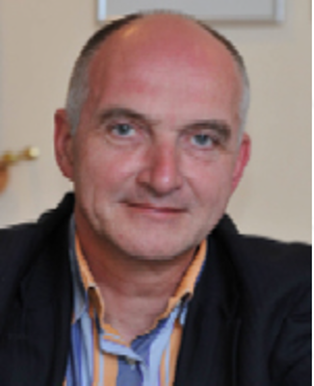
Wiiiem G.Sloof,代爾夫特理工大學材料科學與工程系副教授,自1988年起擔任表面與界面課題組組長。此外,Wim博士獲聘哈爾濱工業大學客座教授,合作關系密切。Wim博士的研究領域主要為金屬和陶瓷涂層的性質、化學成分和結構間的耦合關系。目前,Wim博士的研究項目涉及高溫熱障涂層系統、金屬氧化(包括輻射輔助)、高強度鋼上的保護涂層和自修復材料,并致力于開發用于材料的詳細化學和微觀結構表征的方法和技術。他參與并領導的國家和國際資助自愈材料項目,包括SAMBA歐洲自愈熱障涂層項目(FP7),以及SHeMat歐洲國際培訓網絡中的自愈陶瓷項目等。
主講人簡介(英文)
Dr. Ir. Wim G. Sloof, Associate Professor at Delft University of Technology, Department of Materials Science and Engineering and is head of the Surface and Interface Research group since 1988. He received his MSc degree (cum laude) in 1984 and PhD in 1996 in Materials Science at the Delft University of Technology, The Netherlands. He is also visiting professor at Harbin Institute of Technology, Institute for Advanced Ceramics, School of Materials Science and Engineering in China. His research projects involve the relations between properties, chemistry and structure of various metal and ceramic coatings. Out of the many possible subjects, residual stresses, adhesion and layer growth are specialisation areas. Currently, the research program involves high temperature thermal barrier coating systems, oxidation of metals (including radiation assisted), protective coatings on high strength steels and self-healing materials. Research on self-healing materials was initiated in 2003 focused on high temperature metallic coatings, followed by thermal barrier coating systems and MAX-phase ceramics. A substantial part of the research program is devoted to the development of methods and techniques for detailed chemical and microstructure characterization of materials. He participated and led national and international funded projects on self-healing materials, among them a European project (FP7) on self-healing thermal barrier coatings, called SAMBA, and on self-healing ceramics in a European International Training Network, called SHeMat. Recently, a research program on self-healing ceramics was initiated with the Yokohama National University, Japan. Since 2010 a close cooperation on self-healing ceramics exists with Harbin Institute of Technology, Institute for Advanced Ceramics, School of Materials Science and Engineering in China.
【講座信息】
英文題目:Autonomous oxidation induced crack healing in MAX phase ceramics
內容簡介(中文)
與許多其他常見的工程陶瓷材料相比,MAX相金屬陶瓷更為堅韌的,具有耐損傷性較好,并且在高溫下具有穩定性和耐腐蝕性。高導熱性使這類材料具有抗熱沖擊性。此外,它們在高溫下可保持靜態強度,高于一定溫度時溫度,蠕變將成為限制因素。 MAX相材料也更易于加工。這些特性使MAX相材料在高溫應用中,例如熱循環、機械負載和熱循環等環境下具有獨特的吸引力。動力或推進發電、原料生產等領域普遍存在以上環境。
MAX相材料的機械、熱學和電學特性的獨特組合是由于它們的原子層狀和六方晶體結構。通式為Mn + 1AXn,其中n等于1,2或3,M為早期過渡金屬,A為A族元素(主要為IIIA和IVA,如Al和Si),X為C和/或N。
近期,已有學者證明Ti3AlC2,Ti2AlC和Cr2AlC MAX相中的裂紋損傷可以通過A元素的選擇性氧化來修復。因此,MAX階段是愈合反應的一部分,并且通過從氣體氣氛中消耗氧氣來形成愈合產物。這些MAX相材料滿足裂縫損傷成功愈合的所有要求,即:A元素的優先氧化和快速擴散,氧化時的體積膨脹和氧化產物與基質的粘附。本次講座將講解通過上述MAX相的高溫氧化來修復裂紋損傷的一些亮點。
內容簡介(英文)
In contrast with many other common engineering ceramics, so-called MAX phase metallo-ceramics are tough and therefore damage tolerant. The MAX phase ceramics are stable up to high temperatures and corrosion resistant. The high thermal conductivity makes these ceramics thermal shock resistant. Their static strength is maintained up to high temperatures, above which creep will become the limiting factor. Also MAX phase materials are easy machinable. These properties make MAX phase materials attractive for high temperature applications, where the material is exposed to thermal cycles, mechanical loading and oxidation. These conditions are encountered in e.g. power or propulsion generation, raw material production, recycling facilities etc.
The unique combination of mechanical, thermal and electric properties of MAX phase material is due to their atomic layered and hexagonal crystal structure . The general formula is Mn+1AXn, where n equals 1, 2 or 3, M is an early transition metal, A is an A group element (mostly IIIA and IVA, like Al and Si), and X is C and/or N.
Recently, it has been demonstrated that crack damage in Ti3AlC2, Ti2AlC and Cr2AlC MAX phases can be healed by selective oxidation of the A element. Hence, the MAX phase is part the healing reaction and the healing product is formed by consuming oxygen from the gas atmosphere. These MAX phase materials meet all requirements outlined for successful healing of crack damage, viz.: preferential oxidation and fast diffusion of the A-element, volume expansion upon oxidation and adhesion of the oxidation product to the matrix. Some highlights of healing of crack damage by high temperature oxidation of the aforementioned MAX phases are presented.